Emporium OS
The complete business system for
Champagne Charlie's Vintage Emporium
Cataloguing · Bookings · Payments · Client Access — All in One Place
▽
The complete business system for
Champagne Charlie's Vintage Emporium
Cataloguing · Bookings · Payments · Client Access — All in One Place
Champagne Charlie's Vintage Emporium holds one of Australia's most remarkable costume collections — over 5,000 original garments spanning the 1800s to the 1990s, trusted by film, television, theatre, editorial, and private clients across the country.
We've secured grant funding to professionalise the archive and build a real business around it.
The Emporium OS is the system that makes it all work. One purpose-built platform that handles everything — from cataloguing and condition tracking to bookings, invoicing, and client portals. No extra software subscriptions. No patchwork of tools. Just one system that closes the entire loop.
No more juggling spreadsheets, email threads, and separate tools. Every garment, every booking, every invoice, every client — managed from a single system.
Built on open-source technology specifically for this business. No monthly subscriptions, no per-user fees, no surprise invoices from software vendors.
Whether it's 500 garments or 15,000 — the system grows with the business. Add more clients, more bookings, more team members without outgrowing your tools.
Think of it as the business brain for the entire archive.
Every garment gets a complete digital record — photos, measurements, condition notes, where it is, who's had it, and whether it's available. When someone wants to hire a piece, the system handles the request, tracks the booking, sends the invoice, and follows the garment all the way through dispatch, return, inspection, and back onto the rack.
Photos, era, measurements, condition, handling notes, and full history. Find anything in seconds with powerful search and filters.
"Is the 1920s beaded gown free next Tuesday?" — answered instantly. No phone calls, no checking four different files.
Deposits, rental invoices, sale payments, and damage claims — all tracked. Clients can pay by card online. Staff can see who owes what at a glance.
Condition checks before dispatch and after return. Fragile pieces flagged automatically. Every movement logged for insurance and audit.
Three different experiences, tailored to what each person actually needs — but all connected to the same information.
Let's walk through a real example. A costume designer needs three 1940s dresses for a period drama shooting next month. Here's how The Emporium OS handles it from start to finish.
She browses the collection through the Studio Portal, saves her favourites into a lookbook, and submits a hire request for the dates she needs. The team gets notified immediately.
Staff review the request, check availability, and send back a quote — including daily hire rates, any handling fees, and the deposit amount. All generated from the system, not typed from scratch.
Once the designer agrees, those three dresses are reserved for her dates. No one else can book them for the same period. If she doesn't confirm in time, the hold expires automatically.
The designer pays the deposit online by card. The system records the payment, updates the booking status, and the team is cleared to prepare the garments for dispatch.
Staff pull the dresses from storage, photograph their condition before packing, and mark them as dispatched. The designer gets a confirmation with the expected return date.
The system sends return reminders automatically — 48 hours before, 24 hours before, and on the day. If items are late, the team gets an alert and the client is notified.
Every piece is checked on return. Any damage, staining, or wear is logged with photos. If there's an issue, a damage claim is attached to the booking — no separate paperwork needed.
Final invoice sent (or deposit refunded if all is well). Garments go through cleaning if needed, then back into storage marked as available. The full history lives on the garment's record forever.
Every step is logged. Every handoff is tracked. Nothing relies on memory or sticky notes.
And the designer? She can see her booking status in the portal at any time.
The Emporium OS supports the full commercial range — not just hire. Every revenue stream managed in the same system.
The core business. Productions, stylists, and theatre companies hire garments for a set period. Deposit taken upfront, rental invoiced, condition tracked on return. The system handles availability, scheduling, and late-return reminders automatically.
Some pieces are better sold than stored. Non-core items, duplicates, or pieces in strong demand get listed for sale — either on the public site or by arrangement. Card payments processed online, no manual bookkeeping.
Researchers book supervised access. Publishers and editorial teams license images. No garments leave the building — just quotes, invoices, and digital asset delivery, all tracked in the system.
We start small and prove it works. A pilot with 300–800 garments before migrating the full 5,000+.
Choose the pilot garments. Bring in existing photos, measurements, and records from spreadsheets. Set up team accounts and permissions.
The team starts using the system daily — adding garments, checking conditions, managing locations. Iron out any issues with real workflows.
Process a real costume hire, a real research booking, and a real public enquiry through the system. Stylists log in and try the portal. Prove it works end to end.
"Can a staff member handle a complete booking — from enquiry to garment back on the rack — without opening a spreadsheet?"
That's our pilot success test.
Significant research and development has already gone into understanding the collection, the data, and the technology needed.
We've built a working research prototype — legacy data processing, AI image analysis, garment classification, and inventory pipelines have all been tested and validated.
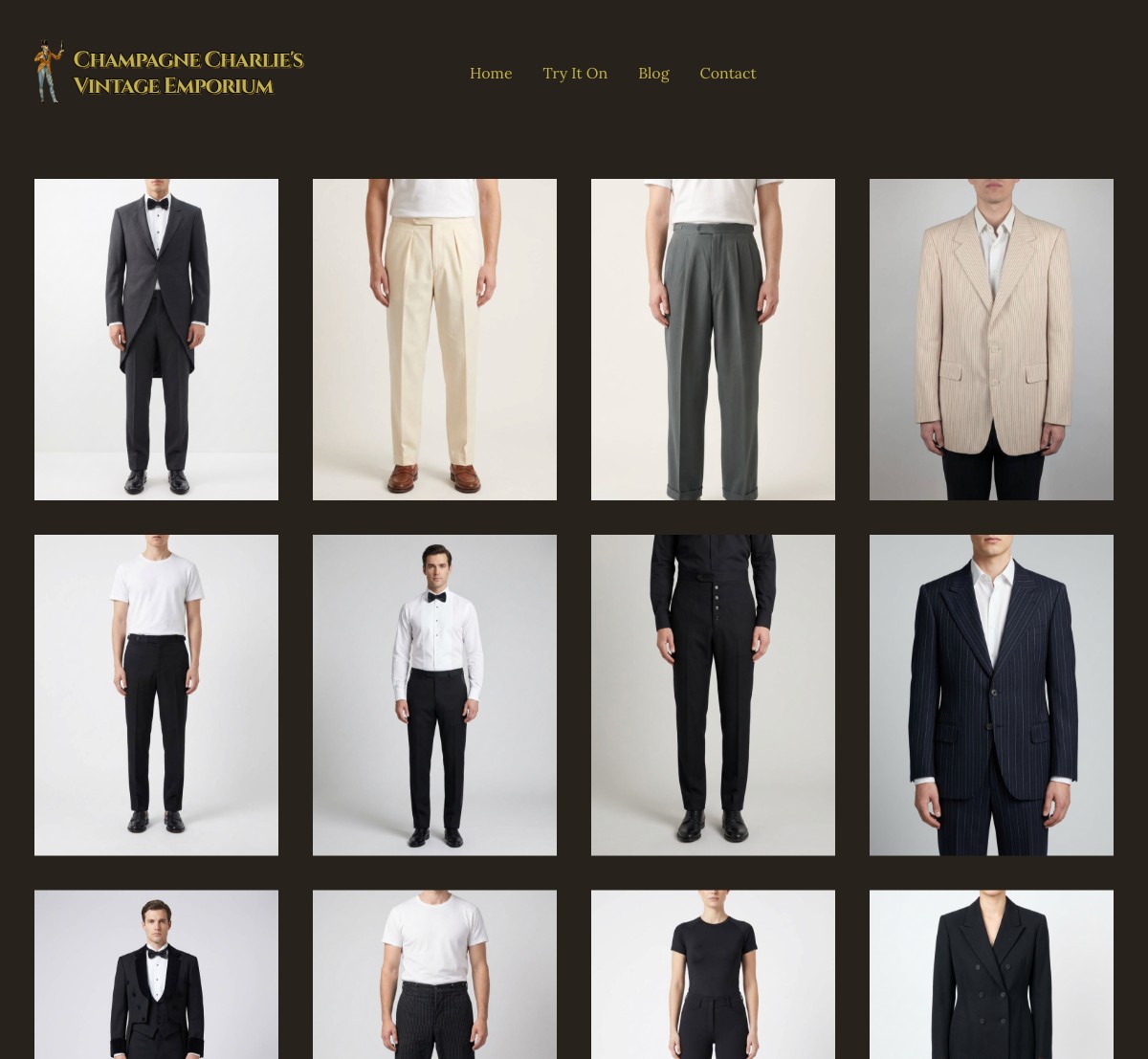
Champagne Charlie's Vintage Emporium is already an established brand with an active client base, a public presence, and real commercial demand for a proper system.
We've used artificial intelligence to analyse hundreds of garments — identifying fabrics, eras, colours, and condition automatically.
This isn't a future plan — it's already done. 310 garments analysed with structured data, and 332 AI-generated virtual try-on images created to show how each piece looks when worn.
Each piece is photographed and fed through an AI vision model. Here's a real example of what comes back:
This data feeds directly into The Emporium OS — searchable, filterable, and always linked to the garment record.
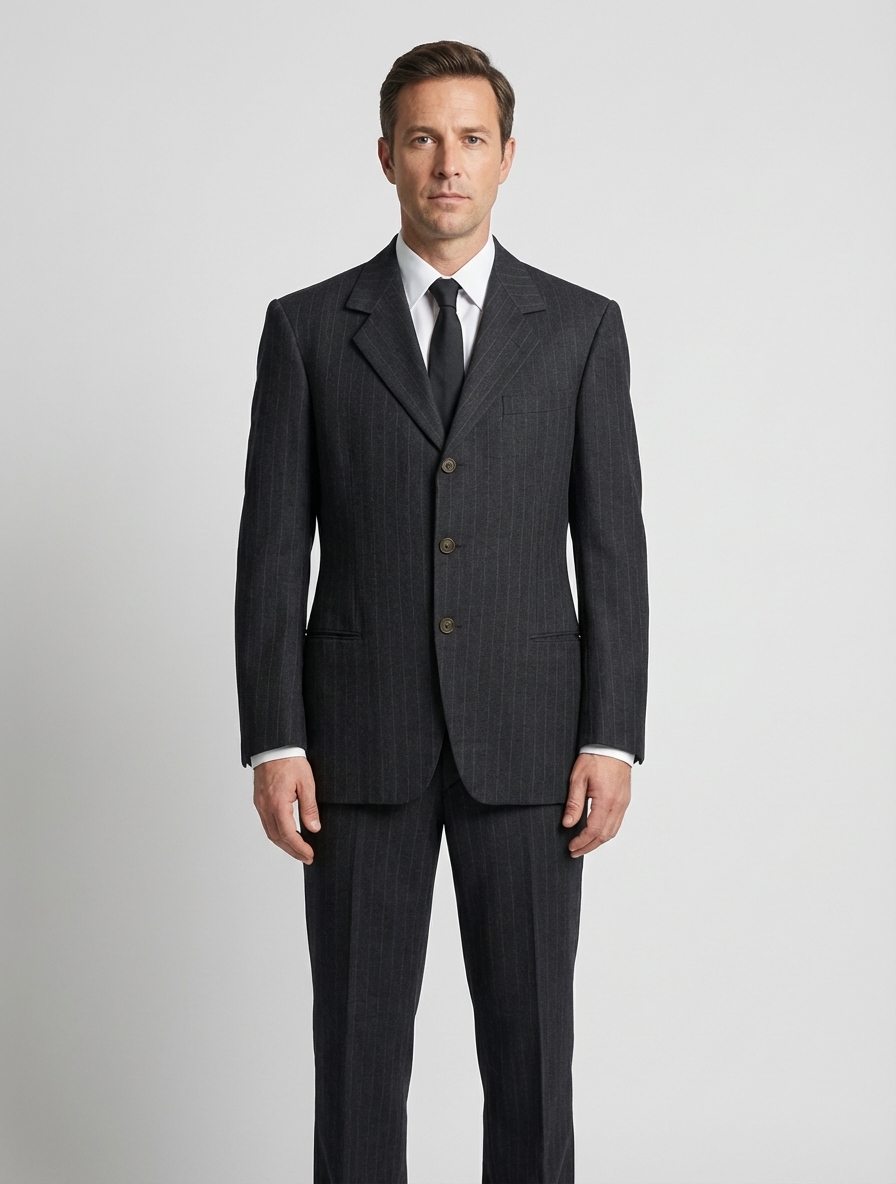
Costume designers can see how garments look on a model — without touching the originals. Generated by AI from the archive photographs.
 1920s
1920s
 1920s
1920s
 1940s
1940s
 1960s
1960s
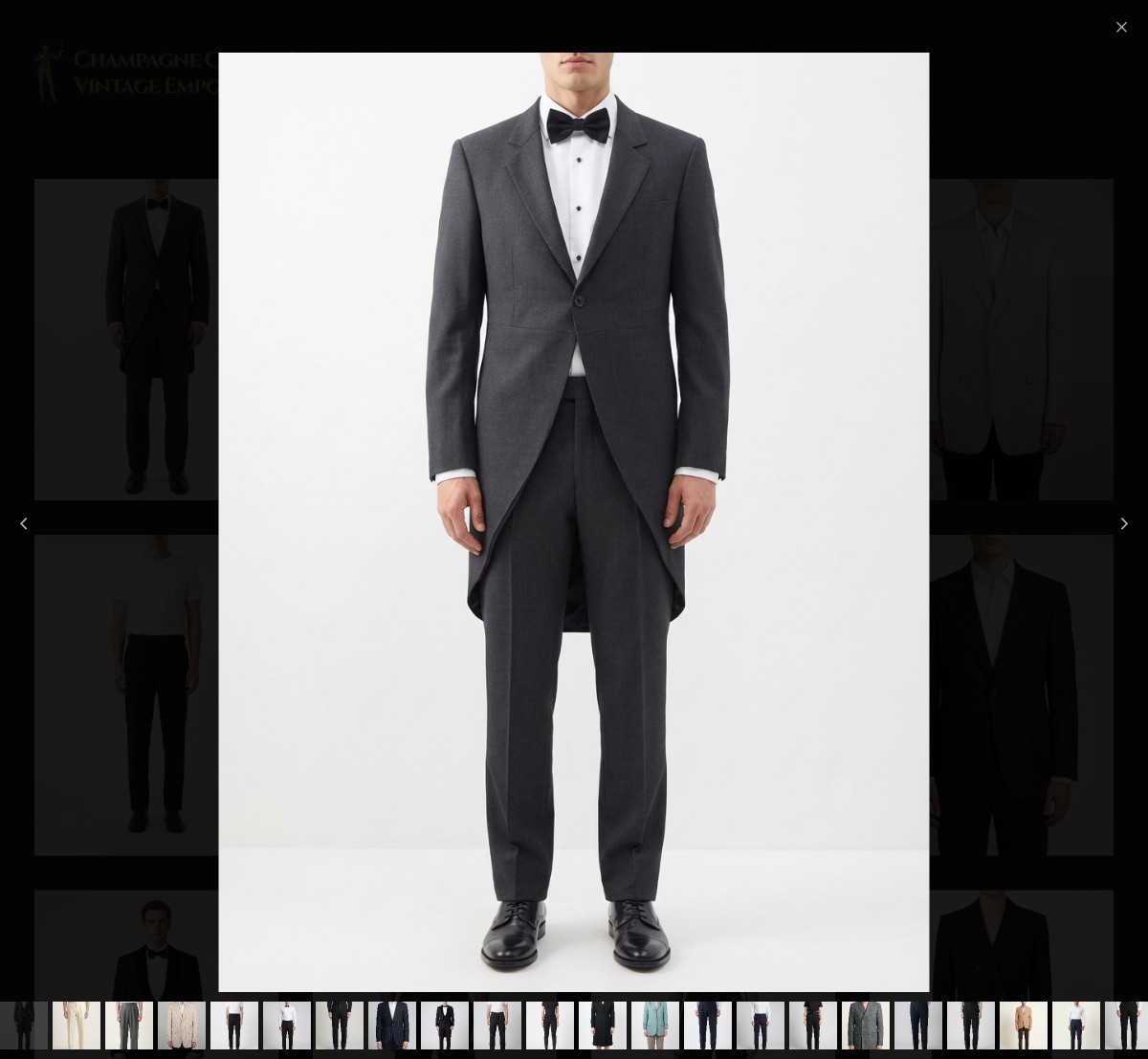
"Stylists browse. AI shows how it looks. No garment leaves the rack until it's booked."
Protecting the Collection Through TechnologyWe'll know it's working when...
Search by era, type, size, colour, or availability. No more flipping through binders or scrolling through spreadsheets.
"Is it available? How much? What condition is it in?" — answered while they're still on the phone, not "I'll get back to you."
Deposits, rental charges, damage claims — generated from the booking, not typed up from scratch. Payments tracked automatically.
Every piece has a condition record. Every movement is logged. Fragile items are flagged before they go out. Insurance documentation is always ready.
For stylists and costume designers: you'll be able to browse the collection, build lookbooks, and submit requests online — without waiting for a callback.
For the team: less time on admin, more time with the garments. One screen shows you everything you need to know.
This system is being built for everyone who works with the archive — whether you're on the team, a costume designer who hires from us, a researcher, or someone who wants to help. Your perspective shapes what we build first.
Your feedback has been received and will directly shape what we build first.